A dental office buildout in Houston needs its technology planned while the space is still studs and ductwork. ClearMax Labs plans and installs that technology as one project: structured cabling, ceiling WiFi, door readers, cameras, displays, the front desk and chairside computers, and two internet lines with automatic failover. ClearMax technicians do the work on site, timed to the general contractor's schedule, and the practice gets a documented, tested network before its first patient.
Last updated: November 2026
What the technology contract covers in a Houston build
Construction contracts in Houston usually stop at the walls. The builder frames, wires power and hangs the ceiling; the dealer sets chairs and the pano; and the network falls between them. Putting all of the technology under one contract settles the questions that otherwise surface in the last week: where the closet goes, how many drops each room needs, who mounts the access points, and which line carries the office when the first one fails.
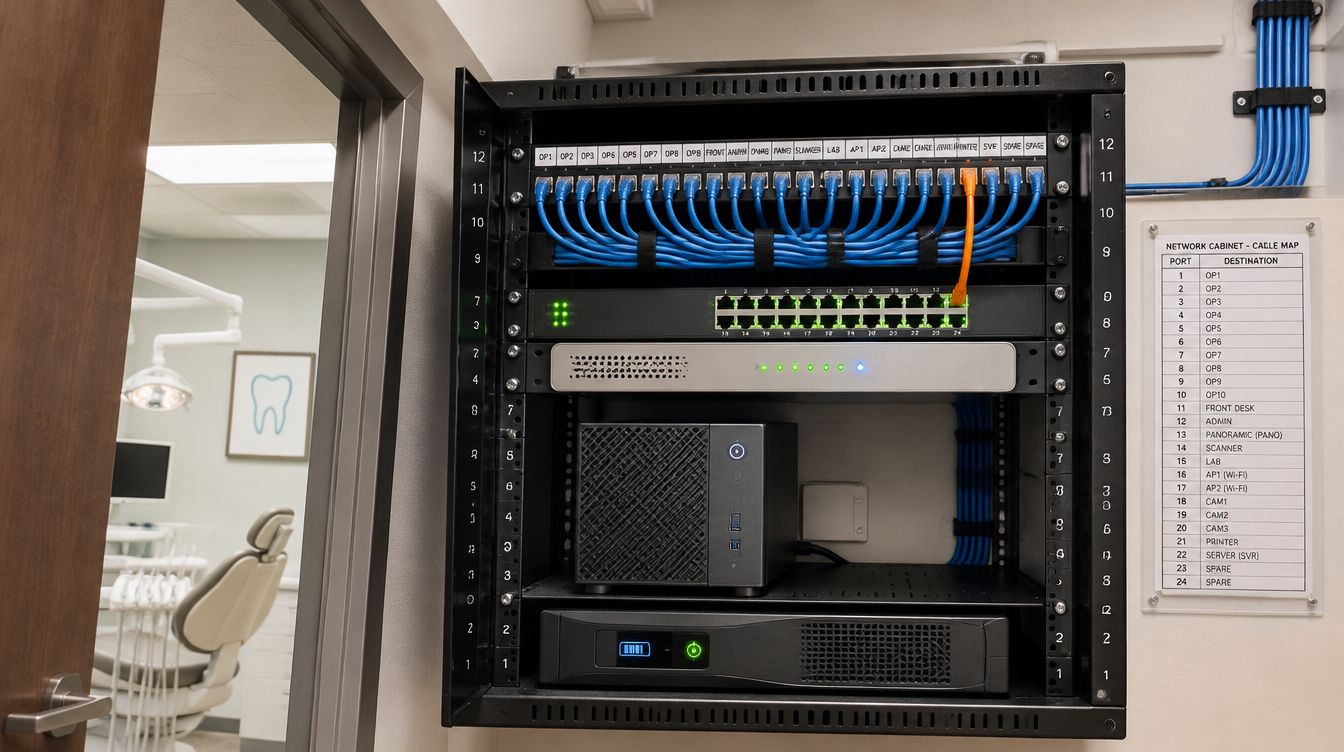
- Cabling: a labeled run to every chair, sensor dock, printer, phone, camera and reader. See network cabling services.
- Wireless: ceiling access points, separate staff and guest networks, and a signal reading in each room. See wireless network setup.
- Internet: a primary line, a second line from a different path, and a firewall that switches between them. See backup internet.
- Door access: readers for the staff entrance, the closet and any room the plan restricts.
- Cameras: entrances, reception and the rear door, recorded to a unit in the closet.
- Displays: planned with the rest of the project.
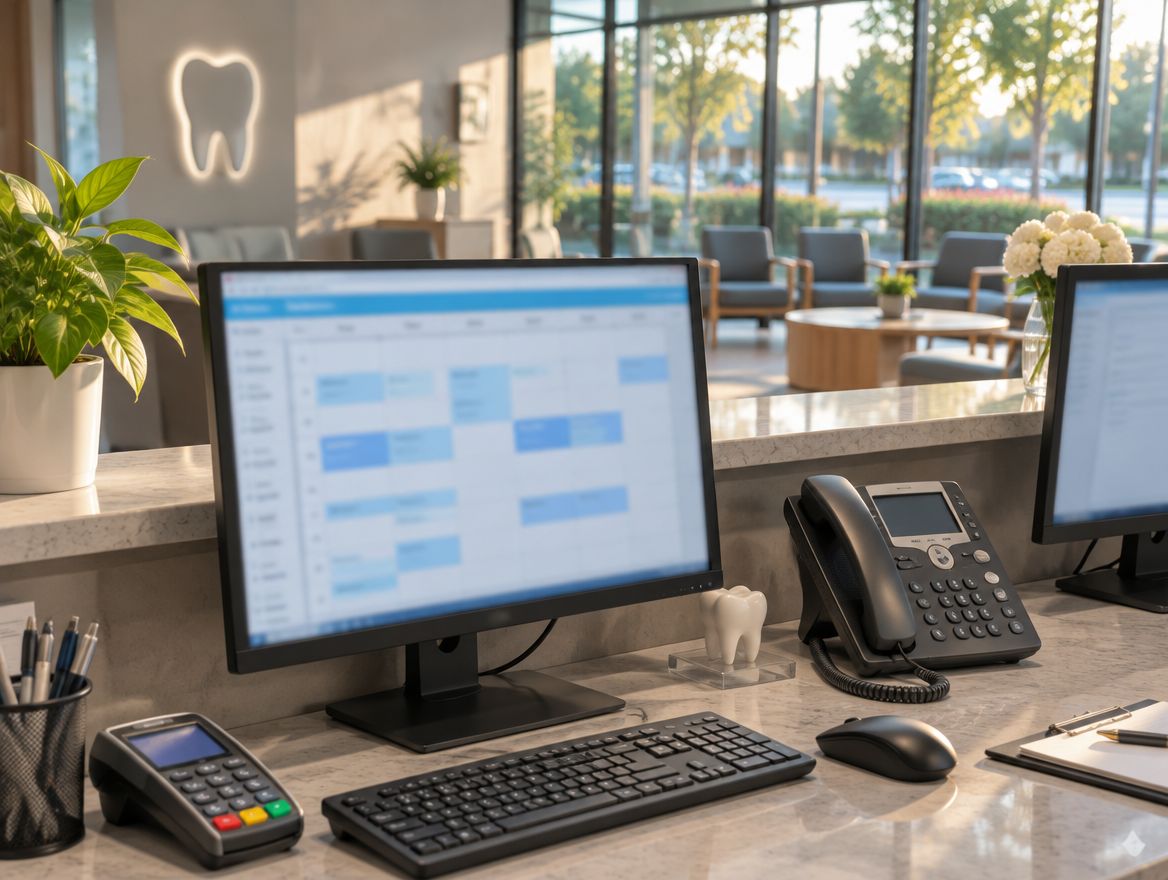
- Computers: front desk, chairside, the doctor's office and the imaging station the sensors connect to.
Denticon changes what the closet holds
Most practice software needs a server in the office. Denticon does not. Planet DDS describes it as cloud-native from the start, with no local servers or installs, so staff work in a browser from any location. The details are on Planet DDS's Denticon page.
For the buildout, that moves the weight from a server to the connection. The closet holds a firewall, switches, the camera recorder and a battery unit; the critical path is the internet line, because without it the schedule, the chart and the ledger are out of reach. That is why a Denticon office is planned with two lines from the start, and why the firewall, not a server, is the most important box in the closet: it decides which line carries the office and keeps guests and devices apart.
Records still have a lifespan the office has to respect. Texas dental rules require records to be kept for a period of not less than five years from the last date of treatment by the dentist. For a patient last treated before turning 18, the rule runs until age 21 or five years after the last visit, whichever is longer, and other laws can require longer still. Any local copies (exports, scanned forms, an imaging archive) are kept on that schedule, not deleted with the old computers.
Build stages and the technology tasks in each
- Design: drops, closet location, rack power and access point positions are marked on the architect's plan; the internet providers are ordered, because a new circuit can take weeks.
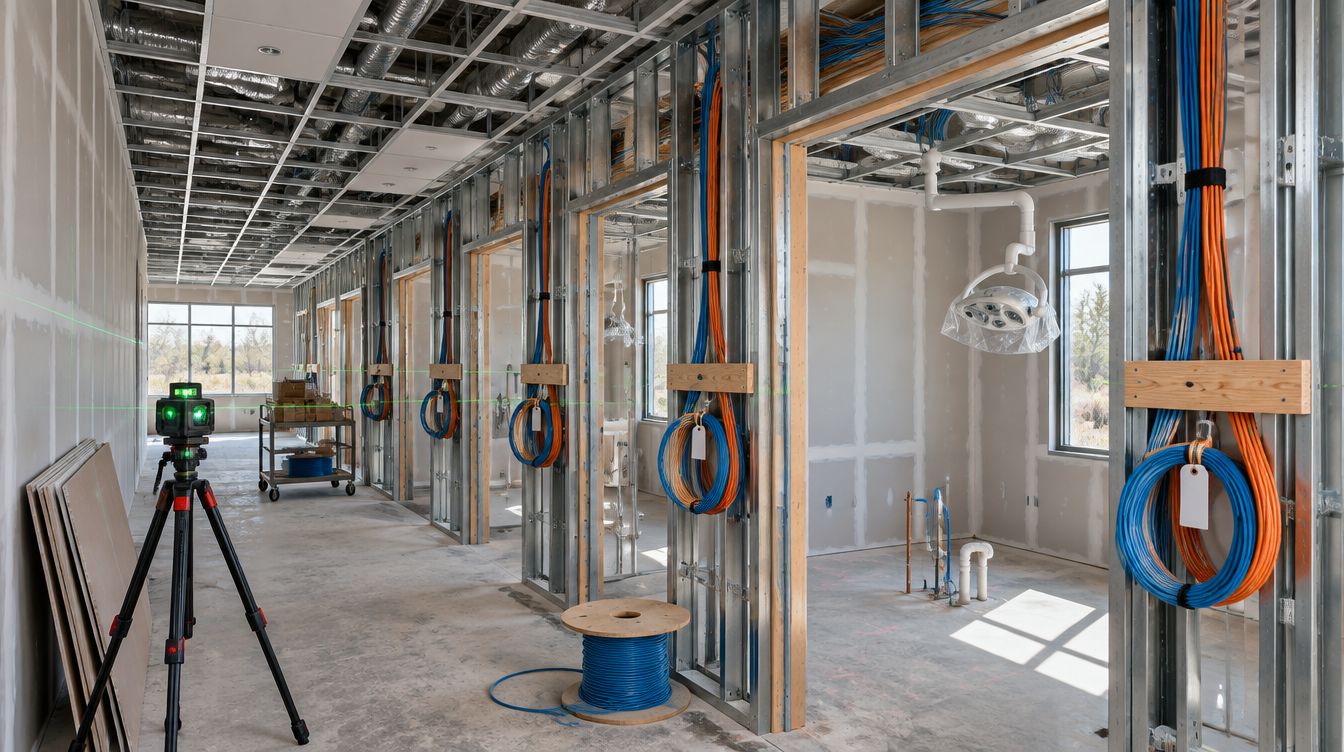
- Rough-in: cable is pulled while walls are open; the closet backboard and rack are installed.
- Above-ceiling check: runs are tested and labeled before the grid is closed.
- Finish: access points, readers, cameras and displays are mounted; computers are set up and joined to the network.
- Opening week: Denticon is tested from every station, failover is tested by unplugging the main line, and the practice receives the drop map and every password.
Door readers and the Texas biometric statute
Many door and time-clock readers ship with a fingerprint option. Texas law says a person may not capture a biometric identifier of an individual for a commercial purpose unless it informs the individual before capturing it and receives the individual's consent. The standard plan uses cards or fobs instead, and a fingerprint reader is installed only once the practice has its notice and consent step written down. The choice goes into the scope so it is made on purpose.
Retiring the old machines
A move or a refresh retires computers that held schedules and imaging. Texas requires a business to destroy customer records containing sensitive personal information that it will not retain, by shredding, erasing, or otherwise modifying the information to make it unreadable or indecipherable through any means. Old drives are erased or destroyed during the project, and the practice keeps a dated list of serial numbers.
Responsibilities outside the technology contract
- The general contractor: walls, ceilings, doors, fire alarm and the power circuits on the drawings.
- The equipment dealer: chairs, the pano or CBCT and their service.
- Planet DDS: Denticon itself, its hosting and its updates.
- The practice: ownership of the network equipment, the accounts and every password from handover on.
Houston practices ask before signing
Can we start before the lease is final?
Yes. Ordering the internet lines and marking the closet on the drawings are the two steps that benefit most from an early start.
If Denticon is in the cloud, why plan the network so carefully?
Because every click now travels over it. A weak access point or a single internet line stops the front desk as surely as a failed server would.
Is a monthly contract part of the project?
No. The buildout has a written scope of its own. Ongoing care is optional and described on the managed IT page.